Sunday, 7 June 2026
Your first Desert trip : everything you need to know before you go
Your First Time in the Desert:
Everything You Need to Know
The desert is the most honest landscape on Earth. It strips away noise, comfort, and distraction until all that remains is silence, light, and an overwhelming sense of your own smallness — in the best possible way. But it will test you, and preparation is the difference between an awakening and a disaster.
Whether you're eyeing the red dunes of the Sahara, the alien plains of the Atacama, the ochre canyons of Wadi Rum, or the vast silence of the Mongolian Gobi, first-time desert travel follows a set of universal rules. Break them and the desert will be unforgiving. Respect them and it will hand you some of the most extraordinary experiences of your life.
Here is everything you need to know before you set foot on the sand.
🌵 Key Desert Facts
- Coverage: Deserts cover roughly one-third of Earth's land surface
- Not all hot: Antarctica is technically the world's largest desert
- Temperature swings: Hot deserts can drop 20–35°C between day and night
- Rainfall: Defined as less than 250mm of precipitation per year
- Humidity: Often below 10% — you dehydrate far faster than you realise
- Best first destinations: Wadi Rum (Jordan), Sahara near Merzouga (Morocco), White Desert (Egypt)
First: Know Which Desert You're Entering
"Desert" is not one thing. A first-timer imagining endless golden dunes will find the Gobi is mostly gravel. Someone expecting fierce heat will be surprised by sub-zero nights in the Atacama. Knowing your terrain changes everything — from the clothes you pack to the dangers you face.
Sahara, Arabian, Mojave. Extreme heat by day, cold nights. Sand and rock. Most familiar desert image.
Gobi, Atacama, Great Basin. Harsh winters, freezing nights, gravel plains. Layering is key.
Namib, parts of Atacama. Fog and cool breezes alongside bone-dry conditions. Unusual microclimates.
Antarctica, Arctic. Precipitation is almost zero but extreme cold dominates all planning.
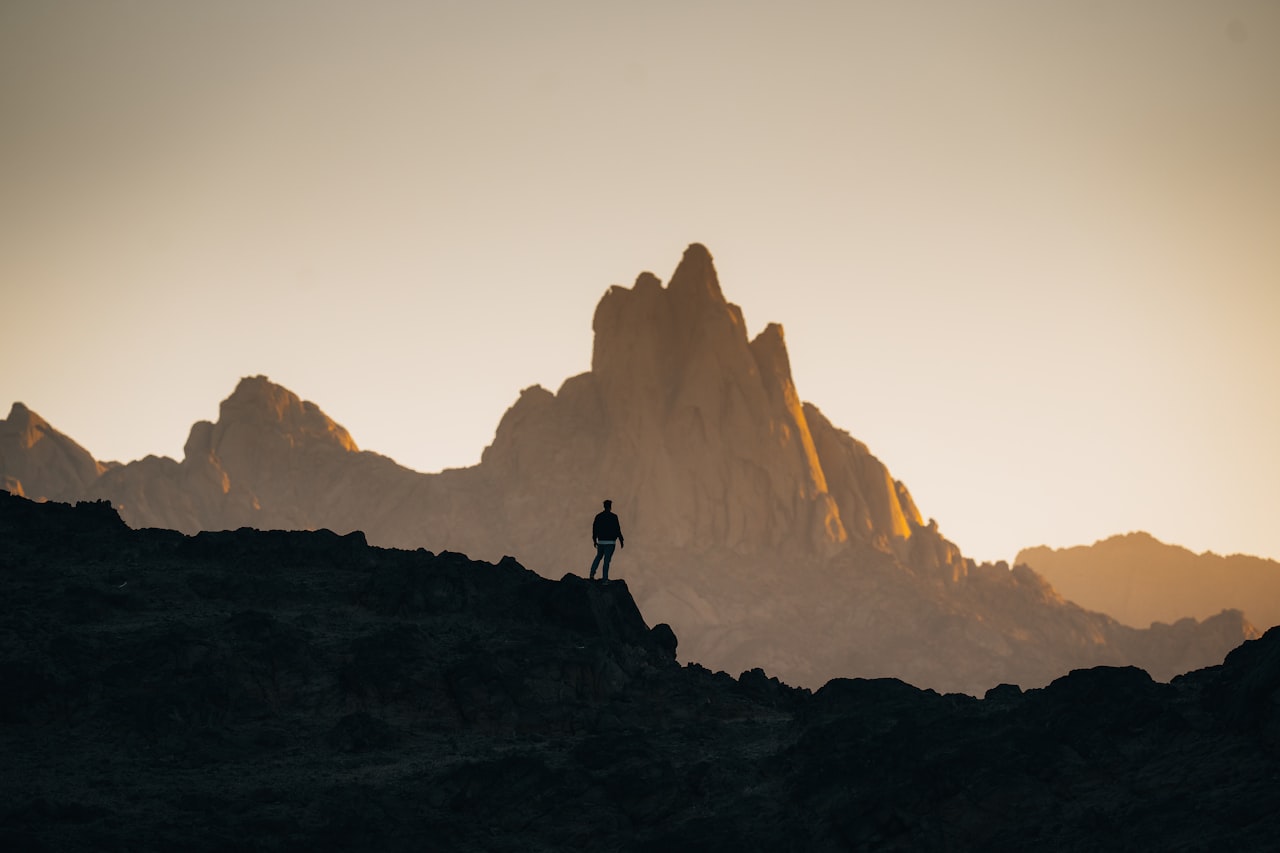
Choose Your Season Carefully
Timing is the single most consequential decision you'll make before a desert trip. Arrive in the wrong season and the desert stops being an adventure and starts being a survival situation.
Hot Deserts (Sahara, Arabian, Mojave)
Avoid the peak summer months of June through August for your first trip. Midday temperatures regularly exceed 45–50°C in these periods, making any outdoor activity between 10am and 4pm genuinely dangerous. The ideal windows are October to April — warm and sunny by day, cool and crisp at night, with the golden light that makes desert photography extraordinary.
Cold Deserts (Gobi, Atacama)
These require a different calculation. The Gobi's summer (June–August) is actually the most accessible season — winters see temperatures plunge to -40°C. The Atacama is relatively benign year-round but its higher-altitude sectors can freeze at any time of year. Spring and autumn remain the safest bets for first-timers in most cold desert environments.
⚠️ Timing Warning
Many first-timers underestimate how dangerous summer in a hot desert can be. Heat stroke can set in within 20 minutes of vigorous activity in 45°C+ temperatures without shade or water. If you must visit in summer, plan all outdoor activities before 9am and after 5pm, and never travel alone.
Water: The Rule That Overrides All Others
Everything in the desert can be negotiated — the gear, the route, the pace. Water cannot. It is the single non-negotiable element of desert survival, and the desert's greatest trick is making you feel less thirsty than you actually are.
In low humidity, sweat evaporates almost instantly from your skin. You don't feel wet. You don't feel as overheated as you should. But you are losing fluid at the same rate — or faster — than in humid conditions, just without the visible cue. By the time you feel thirsty, you are already mildly dehydrated.
The desert rule: 4–6 litres per person, per day in hot conditions. Carry more than you think you need. Drink before you feel thirsty. Never ration water while you are still active and moving.
Carry water in multiple containers — a bladder in your pack plus hard bottles as backup. Bring purification tablets or a filter for emergency use. And critically: know where your next water source is before you leave your last one.
"The desert doesn't kill people. Underestimating the desert kills people. Treat every water source like it might be your last, because sometimes it is." — Experienced desert guide, Wadi Rum, Jordan
Sun & Heat: Cover Up, Slow Down
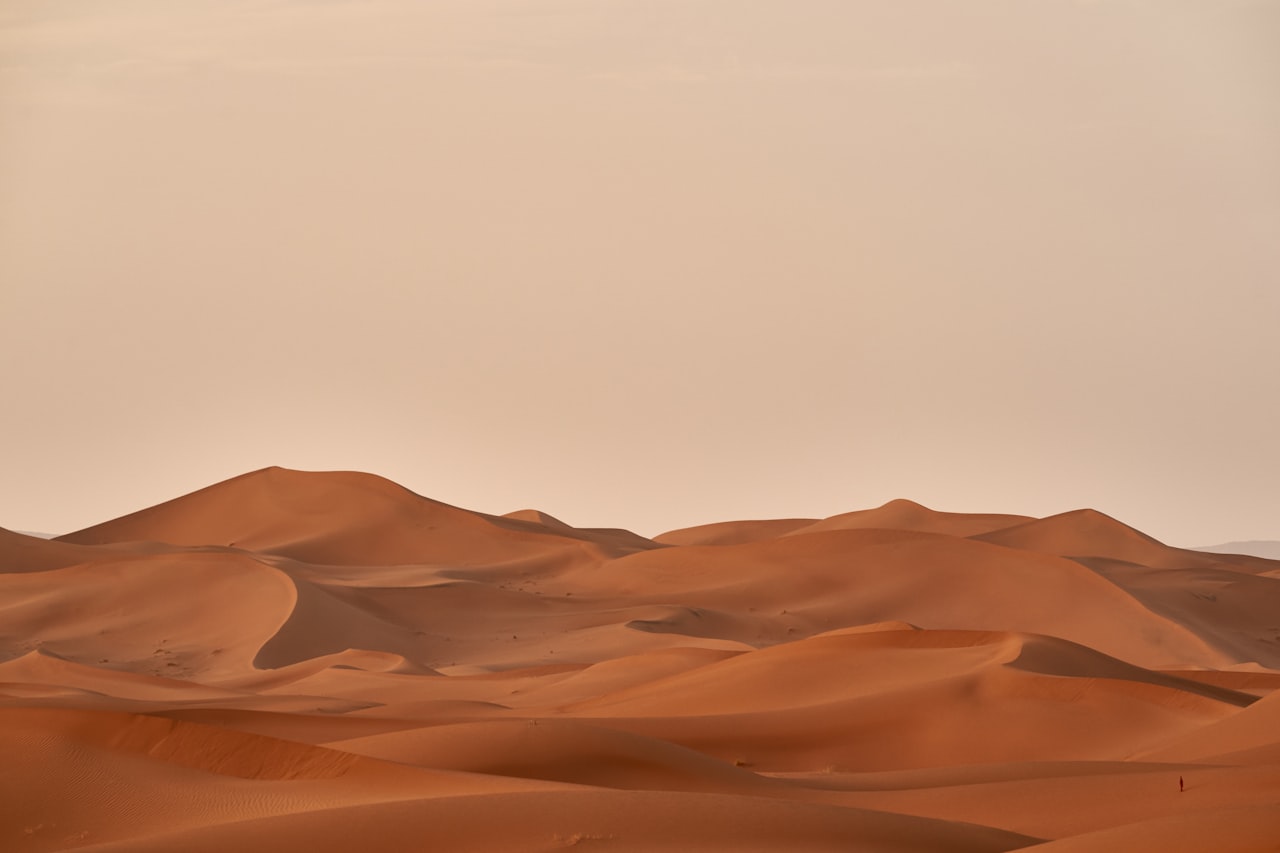
The counterintuitive truth about desert clothing: cover more, not less. In direct sun above 35°C, a loose, light-coloured long-sleeved shirt actually keeps you cooler than bare skin by creating a microclimate between fabric and body that blocks solar radiation while allowing airflow.
Beyond that, the essentials are non-negotiable:
Sun Protection
- SPF 50+ sunscreen — reapply every 90 min
- Wide-brim hat (full 360° brim, not a cap)
- UV-rated wraparound sunglasses
- Buff or keffiyeh for face/neck
- Light long-sleeve shirt (linen or merino)
- Long lightweight trousers
Heat Management
- Rest in shade 11am–3pm always
- Start hiking at sunrise
- Eat small, salty snacks to retain water
- Avoid alcohol during the day
- Use a small battery-powered fan at rest stops
- Know heat exhaustion symptoms
What to Pack for a Desert Trip
Desert packing is an exercise in disciplined contradiction: you need more layers than you expect (cold nights), less than you fear (weight kills you in heat), and a very specific category of items that aren't negotiable.
Navigation & Safety
- GPS device + downloaded offline maps
- Compass (GPS batteries fail)
- Personal locator beacon (PLB)
- Emergency whistle & signal mirror
- Emergency bivvy bag
- Fully charged phone + power bank
Clothing & Shelter
- Insulating layer for nights (even summer)
- Windproof jacket (sandstorms)
- Ankle-high closed-toe boots
- Gaiters to keep sand out
- Lightweight sleeping bag (if camping)
- Tarp or bivvy for emergency shade
Navigation: Don't Trust Your Eyes
The desert is one of the most disorienting environments on Earth for the unequipped. Sand dunes look identical from inside them. Flat salt pans stretch to a featureless horizon in every direction. Mirages distort landmarks. And the very scale of the landscape — a feature that looks an hour away may be a full day's walk — reliably fools the human perception system.
For a first-time desert visit, a local guide is the single best investment you can make. This is not a suggestion for the cautious — it's the recommendation of every experienced desert traveller. Guides carry navigational knowledge built over years, know where water is hidden, can read weather and wind, and will make your experience immeasurably richer with the stories and context they bring.
If you go independently, use GPS with offline maps downloaded before you lose signal. Mark every camp and waypoint. Tell someone your exact planned route and a definitive return time, and leave a copy with your accommodation.
The Cold Night: Desert's Greatest Surprise
Every first-time desert visitor is warned about the heat. Almost none are prepared for how cold the nights become. The same lack of humidity that allows the day to bake also means there is almost no moisture in the air to retain heat after sunset. A day that peaked at 42°C can drop to 8°C by 2am.
Pack a warm mid-layer and sleeping bag regardless of the season. This applies even to summer trips in the Sahara. Experienced desert travellers treat the temperature swing as a design feature — the relief of cool night air after a blazing day is one of the desert's great pleasures. But only if you're prepared for it.
Desert Wildlife: What to Respect
Deserts appear lifeless but are not. They host a remarkable range of creatures that have adapted to their extremes — and most interactions are harmless. But a handful warrant attention.
Shake out boots and clothing every morning without exception. Scorpions are drawn to warmth and dark crevices, and a boot left on the ground overnight is an ideal shelter. The same applies to leaving bags open on the desert floor. Most scorpion stings in North Africa and the Middle East are painful but not fatal for healthy adults — but they ruin a trip. Always carry basic antihistamine and pain relief in your first-aid kit.
Snakes, in most accessible desert regions, will flee long before you approach. Make noise when moving through rocky ground, especially at dusk. Never reach into crevices or under rocks.
The Most Important Thing: Your Mindset
Technical preparation will keep you safe in the desert. But the thing that will make your first desert experience genuinely transformative is a willingness to slow down.
The desert operates on a different timescale. The light changes hour by hour in ways that would take months to catalogue. A dune that looks static reshapes itself continuously in the wind. Silence — actual, total, profound silence — is an experience most people have never had before they stand in the middle of an empty desert at midnight. Let yourself feel small. Let the scale land.
And if you can possibly arrange it: spend at least one night camping under the stars. No street lights, no screens, no ambient glow. Just the Milky Way so thick it looks like smoke, and the temperature dropping around you, and a silence so complete you can hear your own heartbeat. It is, without exaggeration, one of the most perspective-shifting experiences available to a human being.
"People go to the desert to find emptiness. They leave having found the opposite — everything they'd been too busy to notice was already there." — Desert camp host, Erg Chebbi, Morocco
Final Thoughts: Go. Just Prepare First.
The desert asks one thing of you: respect. Respect the heat. Respect the distances. Respect the water. Respect the silence. Do that, and it will hand you back something rare — a genuine encounter with the raw physical world, without softening or mediation.
Start with an accessible destination — Wadi Rum in Jordan, Merzouga in Morocco, or the White Desert in Egypt are all superb for first-timers, with good infrastructure, reputable local guides, and scenery that will restructure how you see the natural world.
Pack smart. Drink constantly. Go early. Stay late. And when you finally lie on your back in the sand and look up at a sky you've never seen before — you'll understand why people keep going back.